
Fecal Incontinence: You Are Not Alone, and You Do Not Have to Live This Way

There are few medical conditions that people find harder to talk about than accidental bowel leakage. Patients often whisper. Some apologize before they even begin. Others have never told anyone; not their spouse, not their closest friend, not their primary care physician. Many have quietly reorganized their lives around it. They carry extra underwear. They map out every public restroom. They stop traveling. They modify their food order at a restaurant. They avoid long walks, restaurants, exercise classes, social events, and even time with grandchildren because they're afraid of having an accident. If that sounds familiar, I want you to know one thing first:
You are not alone.
And perhaps even more importantly:
You do not have to simply accept it as part of getting older.
Let's Start With the Word
Many people dislike the term fecal incontinence. I understand why. It sounds clinical. Harsh. Embarrassing. "Gross." When I talk with patients, we often use different language. "Bowel leakage." "Accidents." "Difficulty controlling bowel movements." Whatever words feel most comfortable, we're talking about the same thing. The inability to consistently control gas, liquid stool, or solid stool. It is incredibly common. It is incredibly underreported. And it is often treatable.
Why Does It Happen?
Continence is actually much more complicated than most people realize. Having control over bowel movements requires many different systems to work together. The anal sphincter muscles have to function properly. The nerves that communicate with those muscles have to work. The rectum needs to store stool appropriately. The pelvic floor muscles need to coordinate. The stool itself needs to have an appropriate consistency. When any one—or several—of these systems is disrupted, leakage can occur. That is why treatment is rarely as simple as taking one medication. The first step is understanding why it is happening.
Women Often Carry This Burden Quietly
One thing I have learned caring for women over the years is how often they minimize their own symptoms. Many women tell me:
"I just thought this was normal after having children."
Or:
"I figured this was just part of getting older."
Or:
"I didn't think anything could be done."
Sometimes childbirth plays a role. Sometimes it doesn't. Pregnancy and vaginal delivery can stretch or injure the pelvic floor muscles and the anal sphincter, even if the injury wasn't recognized at the time. Those changes may not become noticeable until years—or even decades—later. Menopause, aging, nerve changes, diarrhea, prior surgery, pelvic radiation, diabetes, neurologic disease, and many other conditions can also contribute. The important point is this: Just because something is common does not mean you have to live with it.
One Conversation I Have Almost Every Week
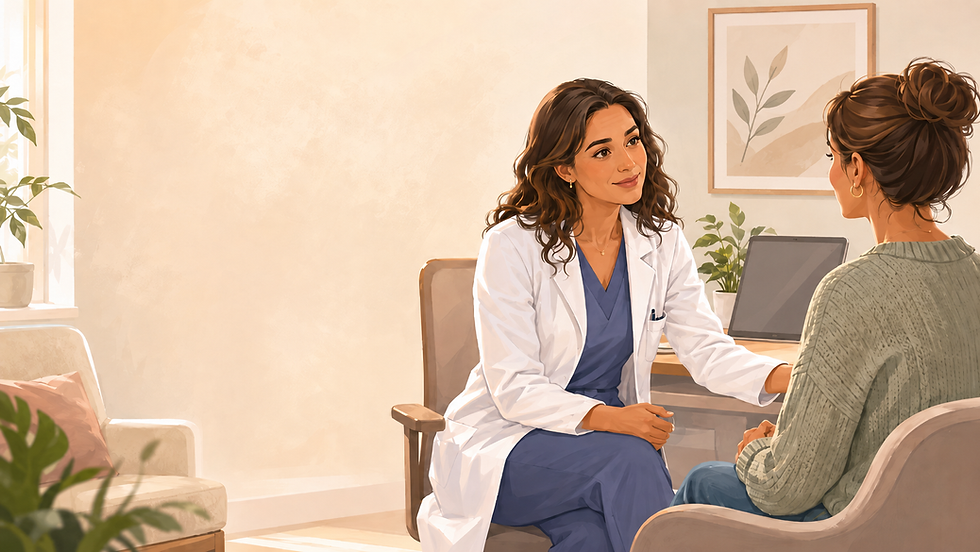
A patient finally comes to the office after years of struggling. She sits down and says,
"I almost canceled today."
Or,
"I've never told anyone this before."
Within a few minutes, you can almost see the relief on her face. Not because we've fixed the problem yet. Because someone is finally willing to talk about it without embarrassment. Woman to woman, I understand how personal this feels. These symptoms affect confidence. Relationships. Travel. Exercise. Intimacy. The simple ability to leave your house without worrying. Those losses are real. And they deserve to be taken seriously.
Treatment Starts With Understanding the Cause
One of the biggest misconceptions is that bowel leakage has only one treatment. It doesn't. Treatment depends entirely on why it is happening. For some patients, improving stool consistency makes an enormous difference. For others, pelvic floor physical therapy is transformative. Some benefit from medications. Others have sphincter injuries that require a different approach. Still others are excellent candidates for sacral neuromodulation—a small implanted device that helps improve communication between the nerves and the bowel. The point is that there is no single solution. There are many. Our job is finding the right one for you.
Pelvic Floor Therapy: One of the Most Underappreciated Treatments
Many patients are surprised when I recommend pelvic floor physical therapy. They often expect surgery. Instead, I recommend seeing a specially trained pelvic floor therapist. These therapists teach patients how to strengthen, coordinate, and better control the muscles involved in continence. For carefully selected patients, this can significantly improve symptoms without an operation. I often tell patients that pelvic floor therapy is similar to rehabilitation after a knee injury. You wouldn't expect your knee to recover without appropriate therapy. The pelvic floor deserves the same attention.
Surgery Is Rarely the First Step
Because I am a surgeon, patients sometimes assume I'm going to recommend an operation. In reality, surgery is only one tool. Whenever possible, we start with the least invasive treatment likely to help. That may include:
Dietary adjustments
Fiber optimization
Medications
Pelvic floor physical therapy
Bowel habit coaching
Skin protection
Sacral neuromodulation
Sometimes surgery is appropriate. Many times, it isn't. The goal is not to perform an operation. The goal is to help you regain confidence.
Please Don't Let Embarrassment Delay Care
This may be the most important part of this article. If bowel leakage has become part of your daily life, please know that this is a conversation we have every week. Nothing you tell me will be shocking. Nothing will be embarrassing. Nothing will make me think less of you. In fact, I usually feel the opposite. I admire the courage it takes to finally bring it up.
My Perspective as a Colorectal Surgeon
Some of the most rewarding patients I care for are not the ones who undergo major surgery. They are the patients who tell me six months later:
"I went on vacation for the first time in years."
Or,
"I stopped carrying an extra change of clothes."
Or,
"I finally played with my grandchildren without worrying."
Those moments matter. As a woman, I know many female patients feel more comfortable discussing these symptoms with another woman. I consider that a privilege, not something I take lightly. These conversations require trust. My promise is that you'll be met with compassion, respect, and honesty—not judgment. You have lived with this long enough. You don't have to carry it alone anymore.


Comments